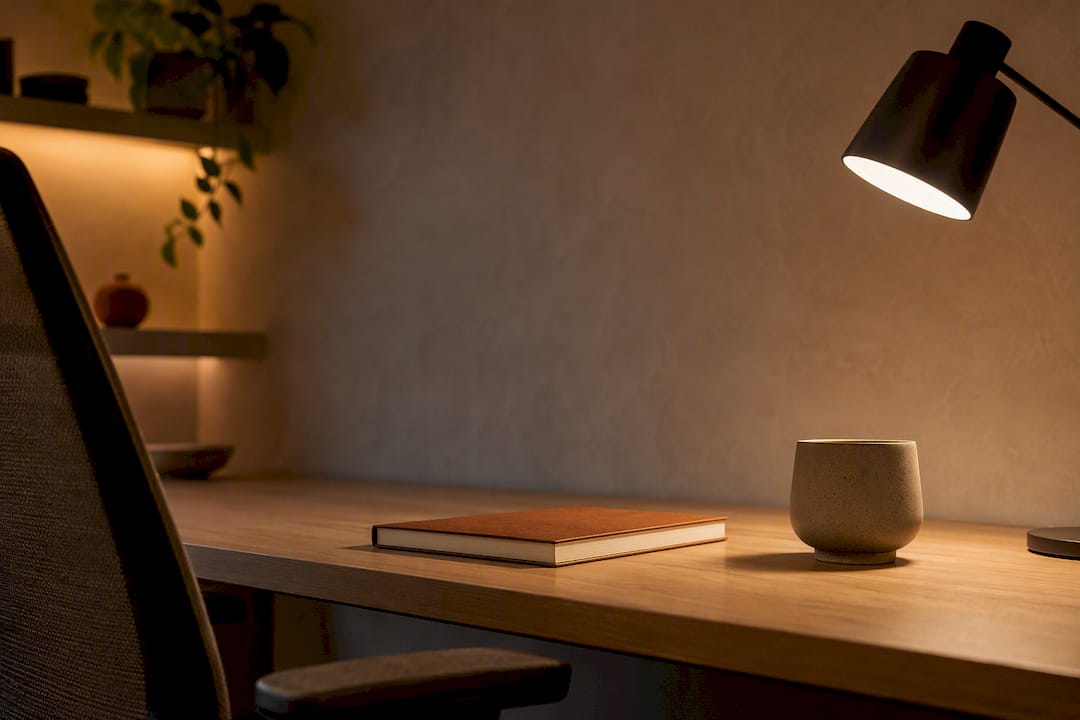
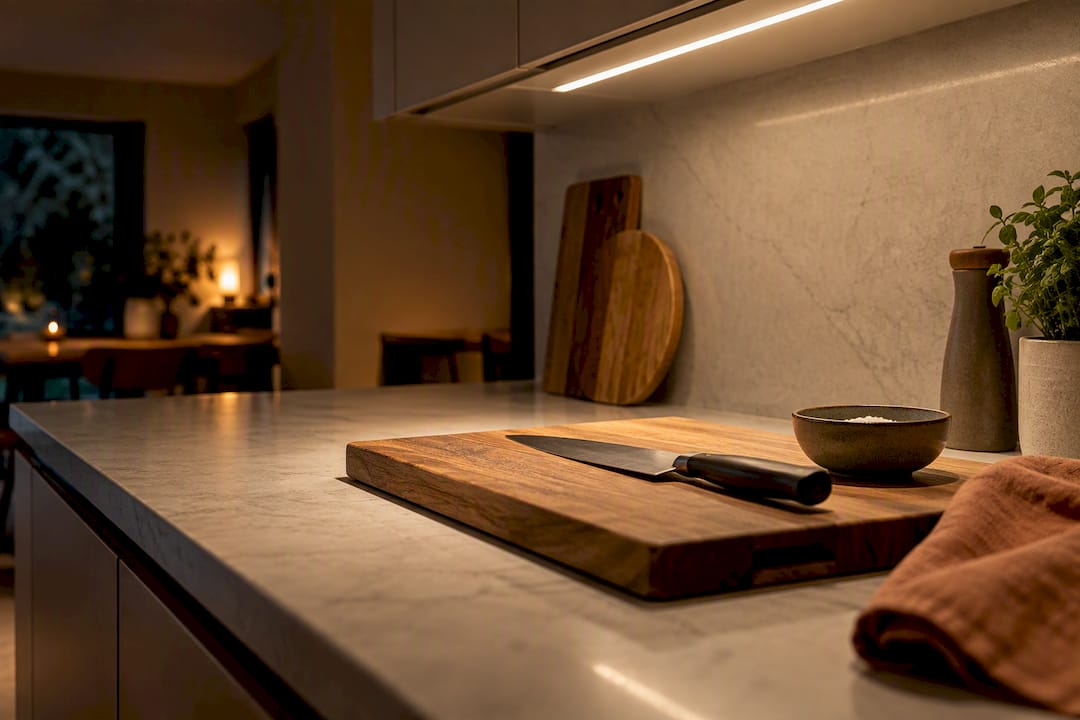
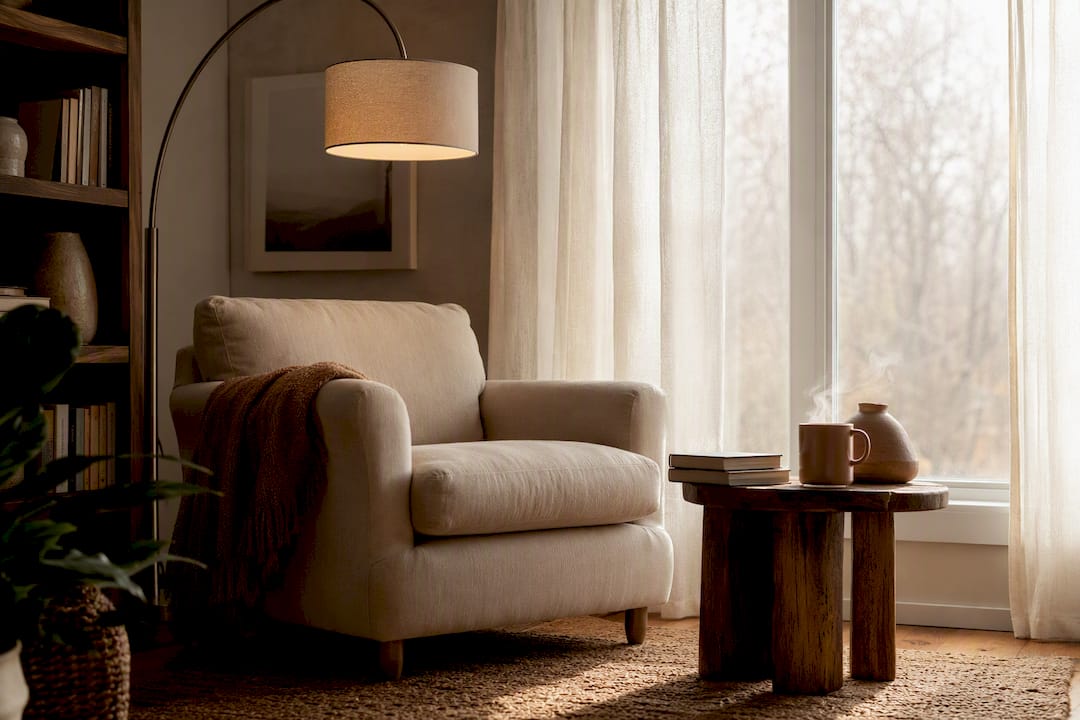
Ambient lighting fills a room with general, even illumination, while task lighting concentrates brighter light on a specific spot for a specific job. Most rooms need both. Start by getting ambient light right, then add task lighting wherever your eyes are actually working, whether that's a cutting board, a book, or a bathroom mirror. Below, we'll walk through the numbers, the fixtures, and the room-by-room decisions that make this easier.
TL;DR:
- Task lighting should be placed closer to work surfaces and on separate switches or dimmers to prevent glare and improve focus.
- Lumens are more reliable than wattage for choosing LED fixtures, especially in task areas where brightness matters.
- Most rooms benefit from layering three types of lighting: ambient for general glow, task for specific activities, and accent for highlighting features.
- Common lighting mistakes include relying solely on overhead fixtures or neglecting task lighting, leading to uneven illumination and glare.
- Testing bulbs in the actual space before purchasing multiple fixtures helps ensure color temperature and brightness meet your needs.
Table of Contents
- What ambient, task, and accent lighting actually mean
- How ambient and task lighting compare in brightness and placement
- Room-by-room lighting that actually works
- How to choose the right lighting for each space
- Layering light like a designer would
- Where homeowners usually get this wrong
- Planning the layers of lighting in your home can take some trial and error.
- Where these lighting standards come from
- Sources
- FAQ
What ambient, task, and accent lighting actually mean
Ambient light is the general glow that lets you walk into a room and see everything in it without squinting. It comes from ceiling fixtures, wall washes, or multiple lamps spread around a space, and it's usually the first layer you switch on. Task lighting is narrower and brighter: it points at one surface where you're doing something that needs your eyes, like chopping vegetables or reading fine print. Accent lighting is a third, smaller category worth knowing. It doesn't light the room or a task. It highlights something, a piece of art, a bookshelf, a textured wall, and it's often the dimmest of the three.
You've likely got examples of each already sitting in your ceiling and on your side tables:
- Ambient: recessed ceiling lights, flush-mount fixtures, chandeliers, wall sconces set to wash light broadly
- Task: under-cabinet strips, desk lamps, pendant lights over a kitchen island, swing-arm reading lamps
- Accent: picture lights, adjustable spotlights, LED strips behind a shelf or TV
Once you can name what you're looking at, choosing where to add more (or less) gets a lot simpler.
How ambient and task lighting compare in brightness and placement
The clearest way to tell them apart is by the numbers and where they sit in a room. Ambient lighting provides general illumination for a room, while task lighting supplies focused illumination for specific activities such as cooking, reading, or grooming, and that split shows up in lumens, beam angle, and mounting.
- Brightness: Ambient fixtures spread moderate light across the whole room. Task fixtures deliver a concentrated pool of brighter light on a small area, often noticeably brighter than the surrounding room.
- Beam and mounting: A wide beam angle and higher ceiling mount suit ambient light, since the goal is even coverage. Task fixtures use a narrower beam mounted closer to the work surface, so the light lands where your hands and eyes are.
- Controls: Put task lighting on its own switch or dimmer, separate from the ambient circuit, so you can turn up the desk lamp without flooding the whole room.
- Glare and reflection: A bare bulb aimed at eye level, or a desk lamp positioned to bounce light off a glossy screen, undoes the benefit of adding task light in the first place.
When buying LEDs for either layer, Department of Energy guidance recommends checking lumen output rather than wattage, since wattage tells you energy draw, not brightness.
Pro Tip: Before buying a fixture, hold your phone's light meter app under existing lighting where you plan to work. If it reads noticeably dim compared to a well-lit desk, that's your cue to add task light rather than swap the whole room's ambient fixtures.

Room-by-room lighting that actually works
Different rooms ask different lighting layers to do different jobs, and the fixture choices follow from what happens in each space.
- Kitchen: Recessed ceiling lights handle ambient coverage, but counters and islands need their own layer. Mount under-cabinet LED strips to light the counter surface directly, and hang pendants 30 to 36 inches above an island so the light lands on the work, not your eyes.
- Home office: A desk lamp aimed at your work surface, not your monitor, cuts glare and eye strain. Position the lamp to the side of your dominant hand rather than directly behind the screen.
- Reading nook or bedside: A swing-arm sconce or an adjustable bedside lamp beats a single overhead fixture, since you can angle the light onto the page instead of the ceiling.
- Bathroom vanity: Vertical sconces at face height on either side of the mirror light your face evenly. A single fixture centered above the mirror tends to cast shadows under the brow and chin.
- Living room: Ambient light sets the room's mood, dimmed low for movie night or brighter for a gathering, while a floor or table lamp near the reading chair or hobby corner supplies the focused light those activities need.
None of these swaps require rewiring the whole house. Most start with one new lamp or one repositioned fixture.
How to choose the right lighting for each space
Matching lumens and color temperature to the task takes the guesswork out of fixture shopping. For close reading, aim for roughly 400 to 800 lumens directed at the page. For kitchen prep work, look for brighter under-cabinet output, often in the 700 to 1,200 lumen range across the counter run. For detailed hobbies like sewing or model building, push higher still and consider an adjustable arm so you can move the light as needed.
Bring this checklist when shopping or talking with an electrician:
- Lumens: Ask for the lumen output, not just the watt-equivalent rating.
- CCT (color temperature): Confirm whether the bulb is warm (2700K to 3000K) or cooler (3500K to 4000K), since that changes how the space feels.
- CRI: Look for a Color Rendering Index above 90 for spaces where color accuracy matters, like a closet or makeup vanity.
- Dimmer compatibility: Confirm the bulb and dimmer are rated to work together; not every LED dims smoothly on every dimmer.
- Beam angle: A narrow beam (under 30 degrees) suits task lighting; a wide beam (over 100 degrees) suits ambient washes.
A red flag worth remembering: if a seller can't tell you the lumen output or CCT of a fixture, or waves off dimmer compatibility as "it should be fine," get a second opinion before you buy.
Layering light like a designer would
The order matters as much as the fixtures. Set your ambient layer first, add task light where you actually work, then finish with accents if you want them. Lighting designers describe ambient light in terms of mean room surface exitance, essentially how much light bounces off the walls and ceiling, and recommend setting a target to ambient ratio when adding task light. The Lighting Design Objectives procedure from the Illuminating Engineering Society frames this as a way to think about perceived brightness, not just raw illuminance.

Color temperature deserves the same care. Warmer bulbs, around 2700K to 3000K, suit ambient lighting in the evening, while task areas often benefit from 3500K to 4000K for sharper contrast. But residential lighting can add meaningfully to your evening light exposure, so a cooler task lamp left on late into the night is worth dimming or swapping for something warmer.
Specs only tell you so much. Products with matching CCT and CRI numbers can still look different in person, so test a bulb in the actual room before committing to a whole order.
Pro Tip: Buy one bulb before buying six. Screw it in, live with it for an evening, and only then decide if it's right for the rest of the fixtures.

Where homeowners usually get this wrong
The mistake I see most often is a single overhead fixture doing every job in a room, which leaves the middle of the space lit and the edges dark. A close second is skipping task lighting altogether and just cranking the ambient light brighter, which makes the whole room glare-y instead of making the counter or desk easier to see.
If you're renting or on a tight budget, a couple of plug-in lamps with the right CCT will get you further than a full rewire. Save the electrician call for permanent fixtures like recessed cans or vanity sconces, where placement really does need to be right the first time.
Planning the layers of lighting in your home can take some trial and error.
Getting ambient and task lighting right in every room takes some trial and error, and we've already worked through the common mixes and mistakes so you don't have to start from scratch. Our Beginner's Guide to Layered Lighting walks through building up all three layers room by room, and our 2700K vs 3000K breakdown helps you settle on warmth before you buy a single bulb.
Browse our full lighting library for room recipes and fixture picks suited to the space you're working on next.
Where these lighting standards come from
Technical claims here draw on the Illuminating Engineering Society's task lighting definitions, the Department of Energy's LED and lighting guidance, and GSA fixture guidance for LED installations, which cover definitions, procedure, and fixture performance respectively. For a broader look at how evening light affects rest, Tranquilora's roundup of tools for evening relaxation is a useful companion read.
Sources
- The Lighting Design Objectives (LiDOs) Procedure (IES)
- LED lighting and energy guidance (U.S. Department of Energy)
- LED and Controls Guidance for Federal Buildings (Integrated Lighting Campaign / GSA guidance)
FAQ
What are the downsides of using only ambient lighting?
Relying on ambient light alone tends to leave task areas underlit, forcing you to squint or lean closer to see detailed work like reading or food prep. It can also mean either overlighting the whole room to compensate, which increases glare, or accepting dim spots at desks and counters.
What are some examples of task lighting?
Common examples include under-cabinet lights over a kitchen counter, a desk lamp angled at your work surface, pendant lights over an island, swing-arm reading lamps, and vertical sconces beside a bathroom mirror. Each aims a brighter, more focused beam at one specific activity rather than the whole room.
What are the four types of lighting?
Most lighting guides group fixtures into ambient, task, and accent lighting, with some adding decorative lighting as a fourth category for fixtures chosen mainly for looks, like a statement chandelier. The core three, ambient, task, and accent, cover the functional differences that matter most when planning a room.
What is considered ambient lighting?
Ambient lighting is the general, even illumination that lets you see and move through a room safely, typically from recessed ceiling fixtures, flush mounts, chandeliers, or sconces set to spread light broadly. It's usually the first layer switched on and the base that task and accent lighting build on top of.