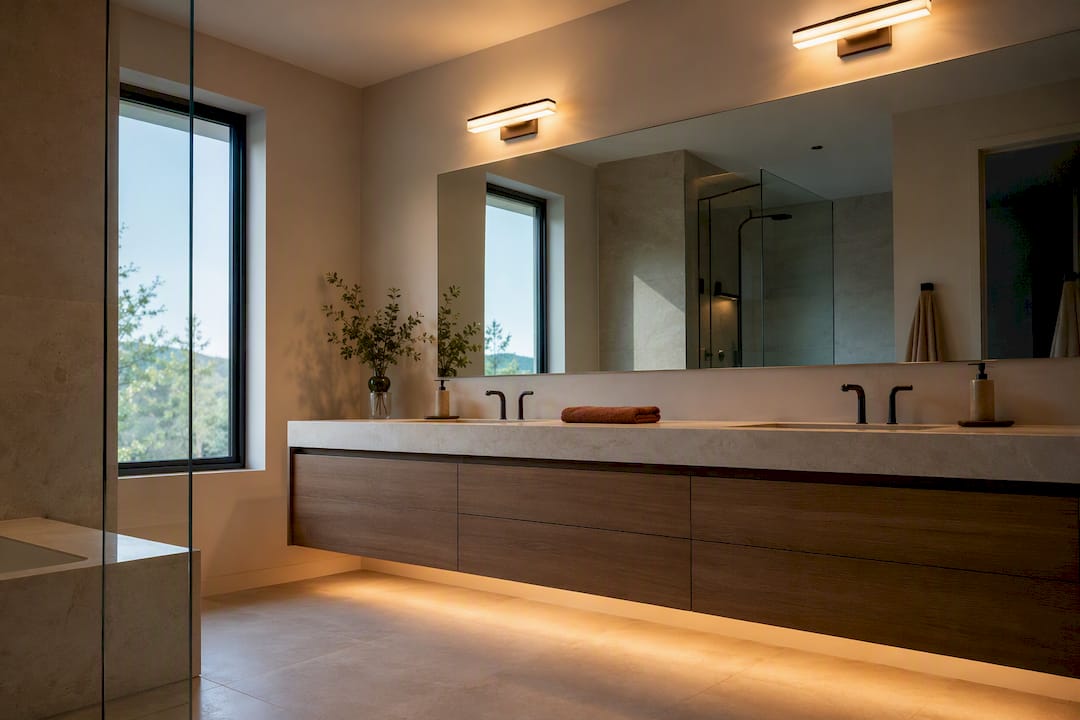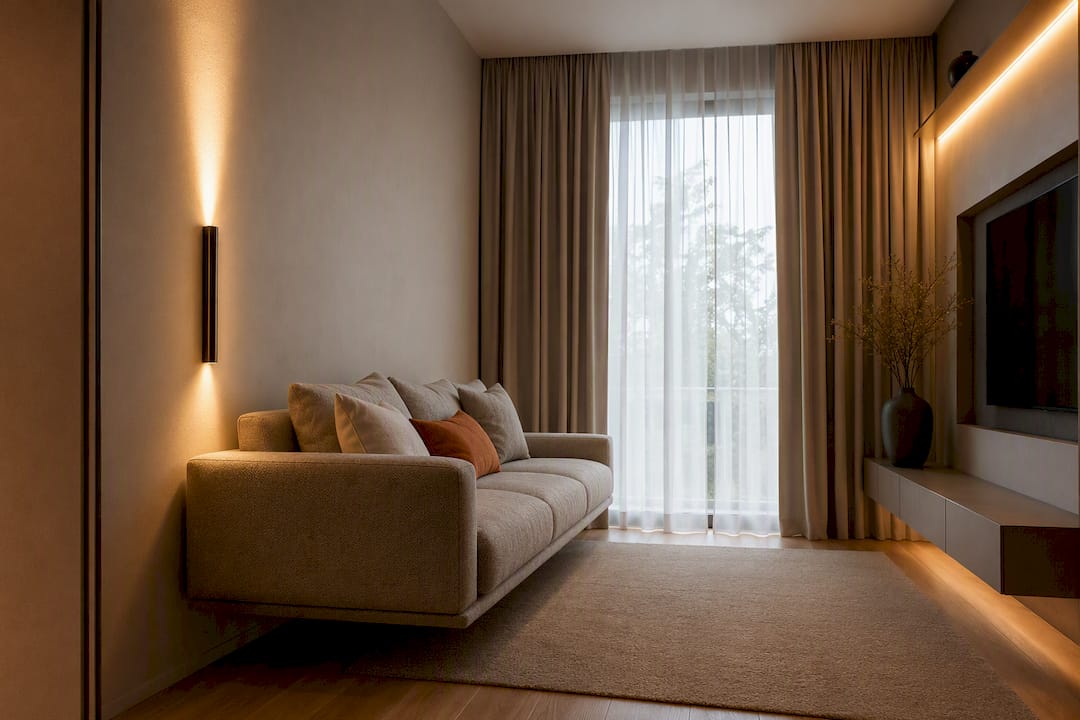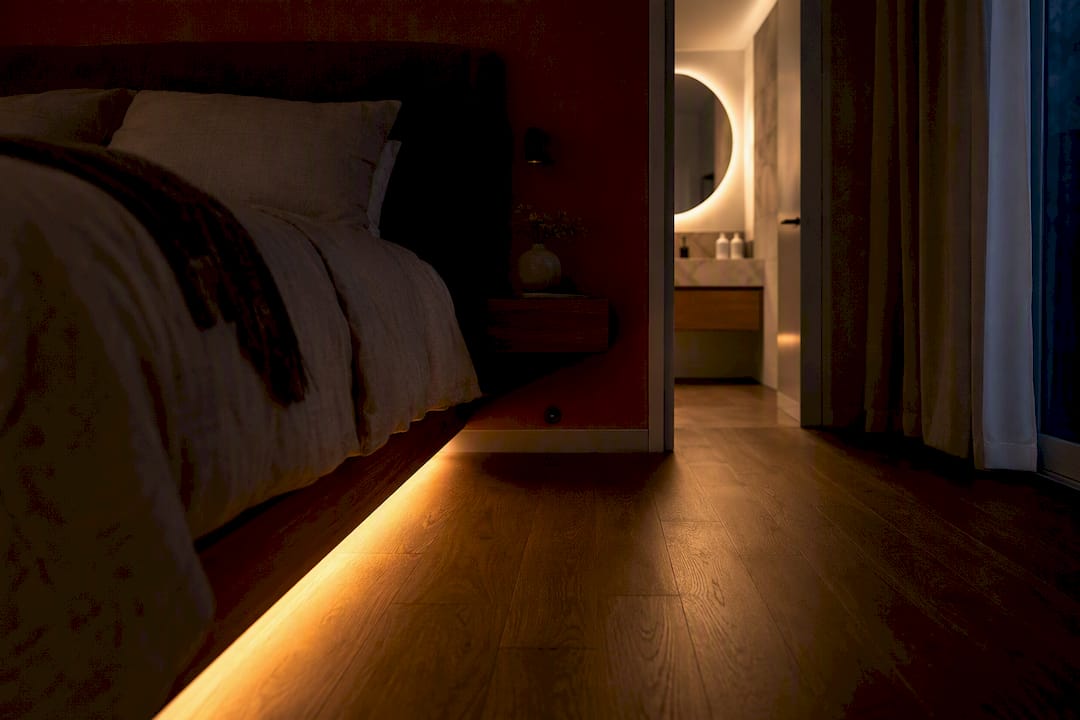
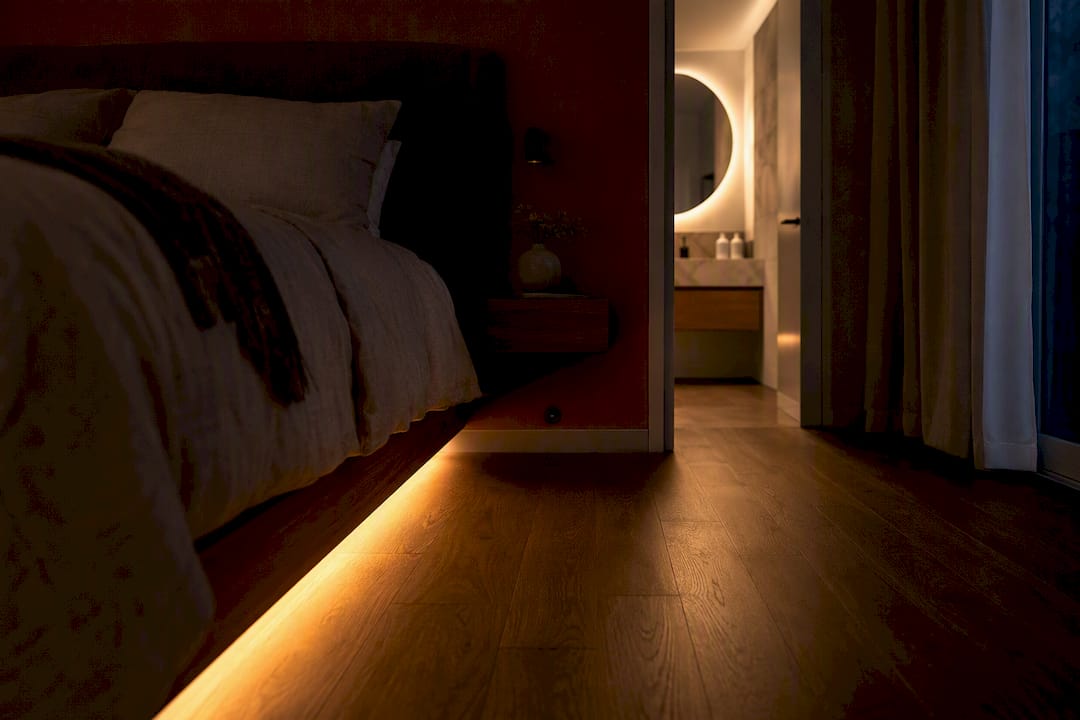
The best bedroom night lighting is warm in color, low in brightness, and placed exactly where your feet need it, not where it looks nice on a shelf. Amber and soft yellow tones around 2700K avoid the melatonin disruption that blue-heavy light causes, and motion sensors or dusk-to-dawn triggers mean you never have to fumble for a switch. Get the checklist right in the next section, and the rest of this guide shows you how to make it look intentional, not accidental.
TL;DR:
- Use night lights with 1 to 40 lumens, warm color temperatures around 2700K to 3000K, and placement at or near floor level for safety and effectiveness.
- Choose motion sensors, dusk-to-dawn, or app-controlled lighting to automate and minimize disruption during nighttime navigation.
- Prioritize amber, red, or yellow light to reduce melatonin suppression, and treat Kelvin ratings as a guideline rather than a guarantee of blue-light avoidance.
- Avoid mounting sensors high on walls; low and outward placement ensures accurate detection of foot traffic and avoids false triggers.
- Select certified, flicker-free products, and implement layered lighting with dimmable fixtures and controlled placement to match bedroom aesthetics and functionality.
Table of Contents
- What Type of Night Light Works Best for Your Bedroom?
- How to Choose a Night Light: A Quick Checklist
- Color, Spectrum, and Sleep: What the Science Recommends
- Where to Place Night Lights So You Don't Trip or Wake Up
- Styling Night Lights So They Match Your Bedroom, Not Fight It
- Automating Night Lighting So You Never Think About It
- Safety, Child-Proofing, and Upkeep
- The Connected Dwelling Perspective: Layer It, Don't Just Add It
- Your Next Step Toward Better Bedroom Lighting
- Sources
What Type of Night Light Works Best for Your Bedroom?
Not every bedroom needs the same fix. A nursery has different demands than a shared master suite, and a hallway leading to the bathroom is its own problem entirely. The category you choose should match the specific friction point you're solving, not just whatever caught your eye at the store.
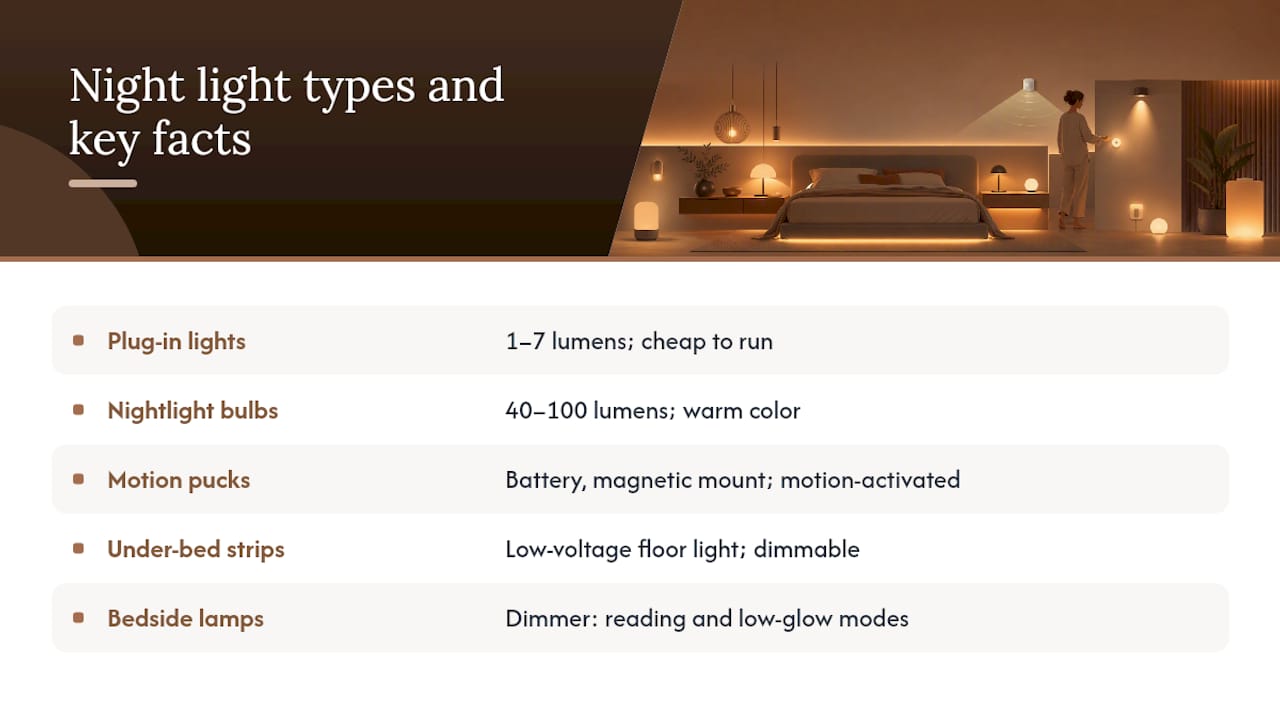
Plug-in night lights are the classic answer for hallways and outlets near baseboards. They run 1 to 7 lumens typically, draw power directly from the wall, and cost almost nothing to leave on all night. Their weakness is fixed placement. You're stuck wherever the outlet happens to be.
Nightlight bulbs swap into an existing lamp or fixture and give you a low-glow option without adding a new object to the room. Look for ones rated around 40 to 100 lumens with a warm color temperature so you're not accidentally installing a mini interrogation light.
Motion-activated puck lights solve the biggest annoyance in night lighting: lights that stay on when nobody needs them. Battery-powered pucks with magnetic mounts, like the motion-activated amber option from BlockBlueLight, let you reposition easily while you find the right trigger zone. Expect a low lumen output, enough to see the doorframe without waking a partner.
Under-bed LED strips cast light downward and outward at floor level, which is ideal for kids or anyone prone to a 2 a.m. bathroom trip. Most run on low-voltage strips with a small driver, and dimmable versions let you tune brightness to the room.
Bedside lamps do double duty as both night light and reading light. A dimmer or a two-stage switch turns one fixture into two tools: bright enough to find a book, dim enough to fall back asleep after.
Wall sconces free up nightstand space and work well when wired to a dimmer switch. Installation is more involved, but the payoff is a fixture that looks built-in rather than bolted on.
Projectors cast ambient patterns or soft color washes on ceilings and walls. They're popular in kids' rooms and in adult bedrooms chasing a spa-like mood, though they're more decorative than functional for pure navigation.
For nurseries, IKEA's guidance on bedroom night lights points to portable, carryable lights that travel with a caregiver from room to room, plus under-bed motion strips as kids get older and start navigating on their own. For partner-sharing situations, remote-controlled or app-based dimming lets one person read or navigate without lighting up the whole room for the other.
How to Choose a Night Light: A Quick Checklist
Standing in an aisle of nightlight boxes with no idea what "2700K" means is a real problem, so here's the short version you can actually use.
- Check the brightness. Look for lumens in the 1 to 40 range for pure navigation lights, and up to 100 lumens if the fixture doubles as a reading lamp. Anything brighter belongs in the "ambient" category, not "night light."
- Check the color temperature. Warm white in the 2700K to 3000K range is the practical baseline. If you're highly sensitive to light at night, look specifically for "amber" or "no-blue" labeling rather than trusting the Kelvin number alone, since some warm white LEDs still carry a small blue component.
- Check the power source. Plug-in units need outlet access near the path you're lighting. Battery and rechargeable units go anywhere but need a replacement or recharge schedule.
- Check the mounting option. Confirm whether the fixture wants a wall, a floor plug, a bedside surface, or a magnetic strip, and match that to what your bedroom layout actually allows.
- Check the controls. Motion sensors, dusk-to-dawn sensors, dimmers, and app-based scenes each solve a different problem, covered in more detail further down.
- Check the safety markings. UL or ETL certification, decent battery quality, and no visible flicker at low brightness are non-negotiable, especially for anything staying plugged in overnight.
Pro Tip: Don't chase the dimmest possible light thinking it's automatically the safest for sleep. A slightly brighter warm amber light is often less disruptive than a very dim cool-blue one, because spectrum matters more than raw brightness when it comes to melatonin.
Color, Spectrum, and Sleep: What the Science Recommends
Blue and green wavelengths suppress melatonin production more aggressively than warm ones, which is why the light color you choose at night matters more than most homeowners realize. The Sleep Foundation's research on light color identifies amber, red, and dim yellow as the least disruptive options for nighttime use, while blue-heavy light, the kind that pours out of phone screens and many "daylight" bulbs, keeps your brain convinced it's still daytime.
Here's where it gets tricky: not every "warm white" bulb actually delivers on that promise. Manufacturers slap a warm-sounding label on a bulb, but the underlying LED can still emit a measurable blue spike. Practitioner guidance on LED color for sleep recommends treating Kelvin ratings as a starting point, not a guarantee. If you're a shift worker, dealing with insomnia, or just someone who wakes at the slightest light cue, a certified true amber or no-blue product is worth the extra research, rather than trusting a "2700K" sticker alone.
Amber, red, and dim yellow light are the colors least likely to interfere with your body's natural sleep signals, while blue and green wavelengths actively suppress the melatonin your brain needs to wind down.
For most homeowners, though, a genuine compromise exists. Warm white in the 2700K to 3000K range, from a reputable brand, gets you most of the benefit without needing to hunt down specialty amber-only products. Save the true no-blue category for people with a specific sensitivity or sleep condition. If you want to go deeper on how Kelvin ratings translate into real-world mood and function, our breakdown of 2700K versus 3000K walks through exactly where that line sits.
Where to Place Night Lights So You Don't Trip or Wake Up
Good night lighting is invisible until the moment you need it, and placement is what makes that possible. Get it wrong and you end up with glare in your eyes at 3 a.m. or a light so poorly aimed it does nothing for the actual path you walk.
- Mount path lights at or near floor level. Baseboard height or under-bed strips illuminate the floor without casting light upward into sleeping eyes.
- Angle motion sensors low and outward, roughly 12 to 18 inches off the ground, so they catch a walking gait rather than triggering on ceiling fans or curtain movement.
- Use magnetic mounts during setup. They let you test two or three spots over a week before committing to permanent placement, which matters because the "right" trigger distance varies by hallway width and door swing.
- Light the bathroom path specifically, not just the bedroom. The stretch between bed and bathroom door is where most nighttime stumbles happen.
- Keep light sources out of direct sightline from the pillow. A soft glow reflecting off a wall does the job without the fixture itself being visible from bed.
Pro Tip: If a motion sensor keeps triggering when nobody's walking by, it's usually mounted too high and catching airflow or shadows instead of foot traffic. Drop it closer to the floor before assuming the product is faulty.
Wiring a wall sconce or hardwiring an under-bed strip is where most DIY projects hit a wall, literally. If concealing cable runs behind drywall or adding a dedicated switch is part of the plan, bringing in an electrician saves you from a visible cord snaking along the baseboard. For readers considering permanent, professionally installed fixtures rather than battery-powered options, Capital Pro Lighting handles that kind of installation work if you'd rather not run wiring yourself.
Styling Night Lights So They Match Your Bedroom, Not Fight It
A night light doesn't have to look like a night light. Treated as a design element rather than an afterthought, it becomes part of the room's personality instead of a stray glow you tolerate.
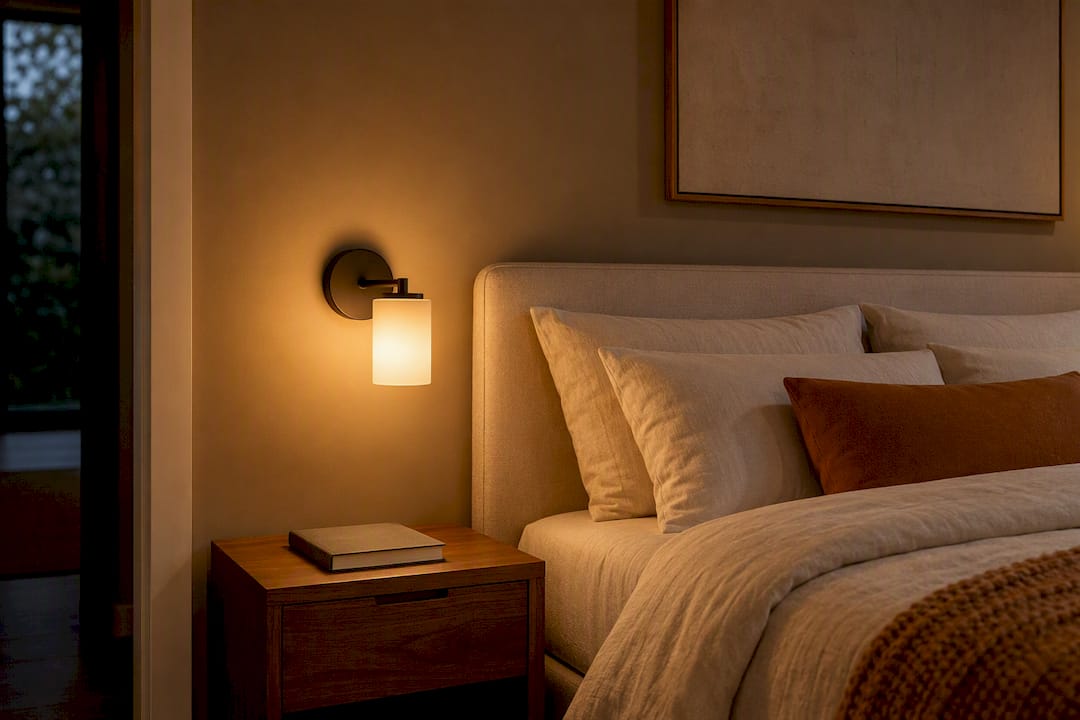
For a warm modern bedroom, a single wall sconce with a fabric or frosted glass shade on a dimmer does more for the room's feel than any plug-in unit ever will. The shade softens the light, and the dimmer lets it drop to near nothing once you're actually asleep.
Scandinavian calm aesthetics lean on diffused, indirect sources: think a low-lumen LED strip hidden behind a headboard or along a floating nightstand, casting a wash of light rather than a visible point source.
Kids' whimsical rooms have more room to play. Projectors, star patterns, and soft-color puck lights work here in ways they wouldn't in an adult bedroom, since the goal is comfort and delight rather than subtlety.
Shared master bedrooms benefit most from asymmetry: one partner gets a dimmable bedside lamp for reading, the other gets nothing extra at all, and a shared motion-activated path light handles the walk to the bathroom for both. Remote or app control keeps one person's late-night reading from becoming the other person's insomnia.
Finish and shade material change how a light reads in a room. A frosted or fabric shade softens output and reduces glare, while a bare LED strip or exposed bulb reads harsher even at the same lumen count. Layering ambient, task, and accent light keeps a bedroom flexible: bright enough to get dressed by, dimmed low for winding down, and a focused task light for reading that doesn't spill into a partner's side of the bed. If layering is a new concept for your space, our beginner's guide to layered lighting breaks down how the three types work together room by room.
Automating Night Lighting So You Never Think About It
The best night lighting setup is the one you forget exists because it just works. Automation is what gets you there, and a few patterns cover almost every bedroom scenario.
- Motion-activated path lighting. A sensor near the floor triggers a low amber glow only when you're walking, then shuts off automatically. This is the pattern most homeowners should start with, since it eliminates both the "light left on all night" problem and the "fumbling in the dark" problem in one move.
- Dusk-to-dawn auto-on. Useful for hallway or entry fixtures that should simply turn on at sunset and off at sunrise without any manual input, no motion sensor required.
- Gradual wake or wind-down scenes. Smart bulbs or a smart switch tied to a schedule can dim gradually toward bedtime and brighten slowly toward morning, mimicking natural light shifts instead of an abrupt on/off.
Smart bulbs give you more granular color and brightness control per fixture, which suits a bedside lamp you want to shift from warm white to near-off. Smart switches are more reliable for fixtures multiple people use, since the control lives on the wall instead of inside an app that a guest or family member might not have installed. If you're deciding between the two for your bedroom setup, our comparison of smart bulbs versus smart switches walks through the trade-offs in more depth.
One caution worth building into any automated setup: battery backup or a manual fallback schedule matters if your smart home hub goes offline. A night light that depends entirely on Wi-Fi to turn on is a bad night light the moment your router hiccups.
Safety, Child-Proofing, and Upkeep
Look for UL or ETL certification on anything plugged into a wall overnight. It's the baseline signal that a product has been tested for basic electrical safety rather than assembled with no oversight at all.
For battery-powered units, stick with name-brand batteries and check them seasonally. A night light that flickers at low brightness or feels warm to the touch after a few hours of use should be unplugged and replaced, not tolerated.
In rooms with young children, favor tamper-resistant plug-in units over freestanding lamps with accessible cords, and choose puck lights or strips mounted out of reach rather than anything a curious toddler can pull down. Rechargeable units typically hold a usable charge for a year or two before the battery degrades noticeably. Once you notice dimmer output or shorter run times between charges, it's time to swap the unit rather than wait for it to fail completely.
The Connected Dwelling Perspective: Layer It, Don't Just Add It
Most homeowners treat night lighting as an accessory: one plug-in unit, wherever there happens to be an outlet. That's backwards. The better approach starts with warm, low-lumen light chosen for its spectrum, placed exactly where you walk, and automated so you never touch a switch.
If you're starting from scratch, do it in three moves. First, walk your bedroom at night and note where you actually stumble or reach for a switch. Second, install one motion-activated path light at that exact spot. Third, layer in automation, whether that's a dusk-to-dawn trigger or a smart scene, so the whole system runs itself. Get those three right before you worry about matching finishes or chasing a specific aesthetic. For deeper reading on why so many bedrooms get the basics wrong before they even reach the styling stage, our piece on common living room lighting mistakes applies just as directly to bedrooms.
— August
Your Next Step Toward Better Bedroom Lighting
Theconnecteddwelling gives you something most product listings won't: guidance on which warm-toned, low-glare options actually fit your specific bedroom layout, instead of a generic ranked list built for clicks.

If you're ready to move past trial and error, our lighting hub covers everything from fixture selection to placement strategy in far more depth than a single guide can hold. New to layering ambient, task, and accent light in the same room? Start with the beginner's guide to layered lighting before you buy anything. And when you're ready to shop, our recommended products page narrows the field to fixtures we'd actually put in our own bedrooms, sorted by the warm color temperature and low-glare qualities this guide just walked you through. Match the color and placement to how you actually sleep, then let the automation handle the rest.
Sources
The Sleep Foundation covers how light color affects melatonin and sleep quality. Philips lighting offers designer guidance on layering bedroom light sources. IKEA shares practical night-light use cases for families. BlockBlueLight details motion-activated, amber-toned product features worth knowing before you shop.
- What Color Light Helps You Sleep? | Sleep Foundation
- Bedroom Lighting | Philips lighting
- 4 ways to use night lights in your bedroom | IKEA