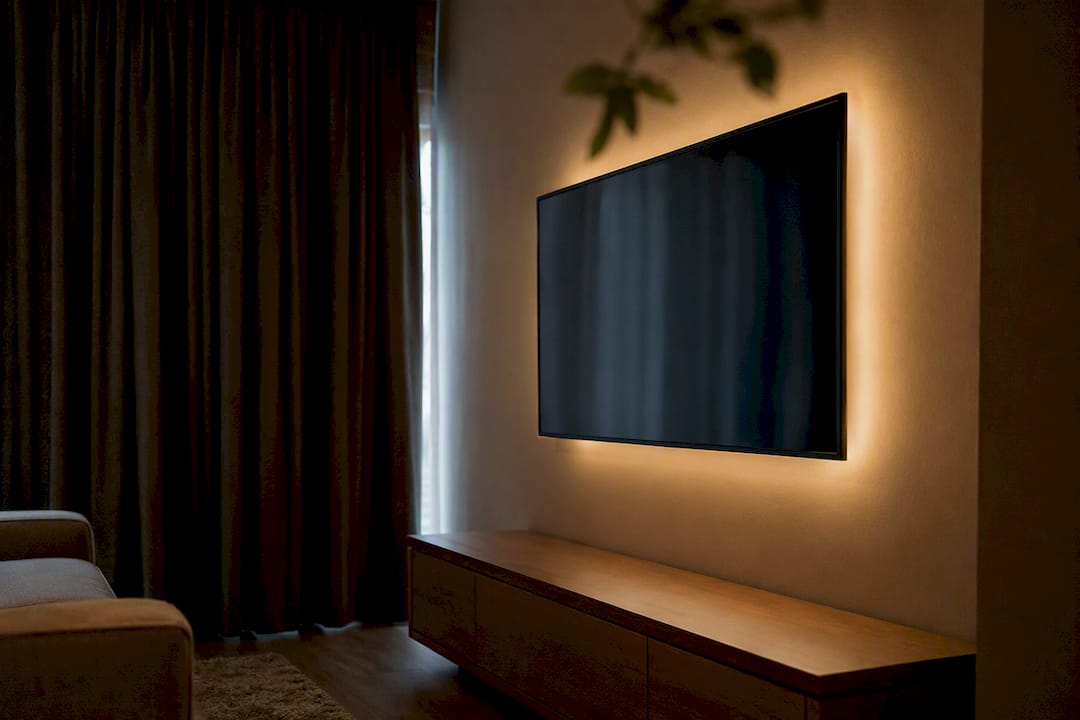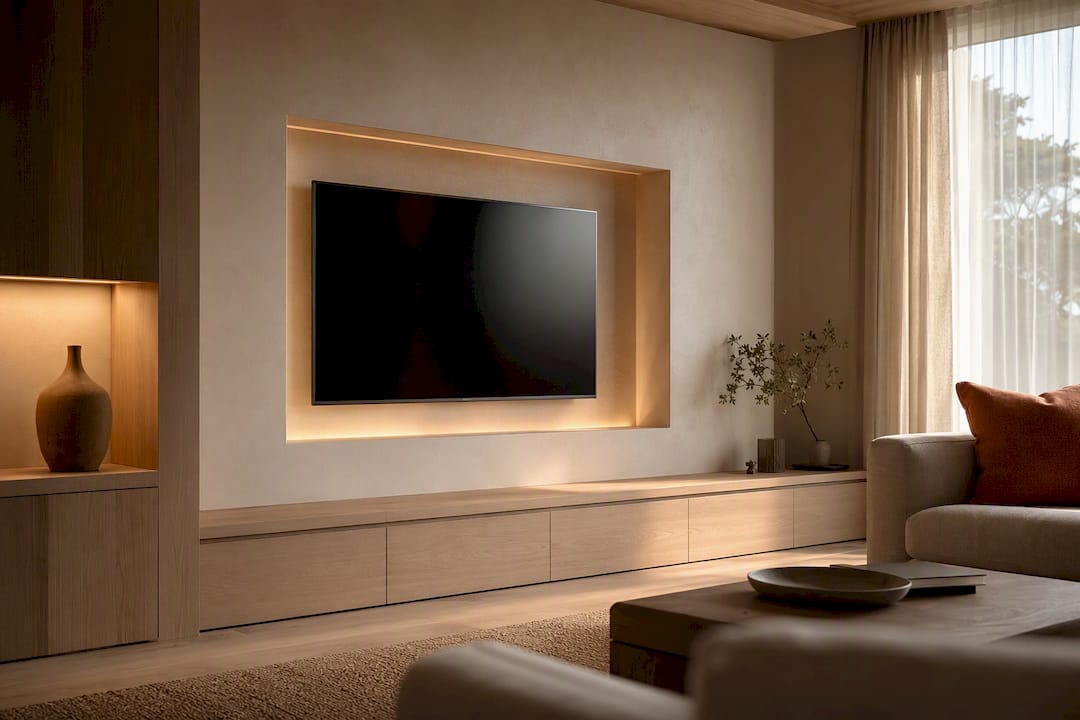
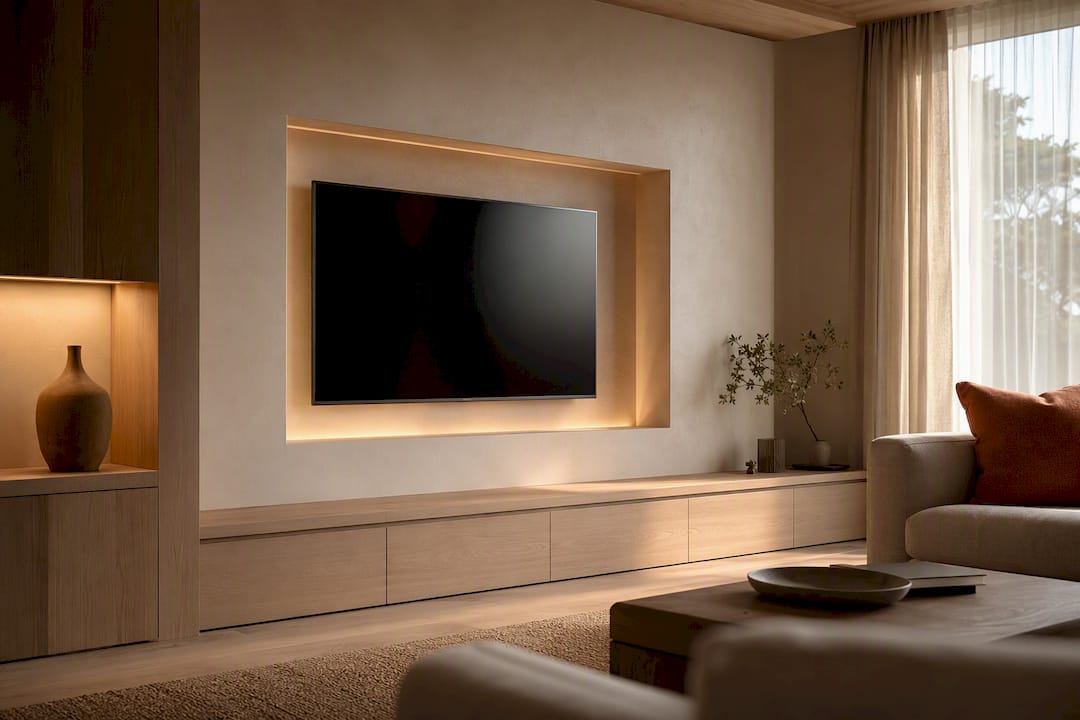
A minimalist TV wall comes down to three moves working together: flush-mount the screen so it sits close to the wall, hide every cable, and let the space around it hold exactly one intentional element. Get those right and the room feels calm even with a 65-inch screen anchoring it. The ten ideas below show you how to apply that rule in your own space, whether you own your walls or rent them.
TL;DR:
- Using warm tones like wood slats or plaster finishes creates a welcoming atmosphere, replacing stark white or cold LED strip designs.
- Keep the wall flush-mounted with the TV and conceal cables using routed channels, without relying on permanent built-in cabinetry.
- Incorporate lighting with dimmable, warm bias strips and textured wall washers to enhance the space without creating glare or visual clutter.
- Choose a single, intentional artwork with a limited color palette and proper placement to prevent visual competition with the screen.
- For rental or budget options, peel-and-stick panels, removable wallpaper, and plug-in LED strips can achieve a minimalist look without permanent modifications.
Table of Contents
- Minimalist TV Wall Ideas That Actually Work in a Real Living Room
- How to Choose the Right Approach for Your Room
- Renter-Friendly and Budget-Friendly Ways to Get the Same Look
- Lighting and Tech Integration: What Actually Keeps It Minimalist
- Keeping the Space Around Your TV Clutter-Free
- Bringing Smart Home Control Into the Wall Without Breaking the Look
- Choosing Artwork That Doesn't Compete With the Screen
- Lighting Placement That Reinforces the Minimalist Look
- What I'd Actually Do in My Own Living Room
- Get More Warm Minimalist Lighting Ideas From The Connected Dwelling
- Sources
Minimalist TV Wall Ideas That Actually Work in a Real Living Room
Warm minimalism is where TV wall design is heading in 2026. Instead of stark white boxes and cold LED strips, the look now leans on wood texture, plaster finishes, and soft amber light that keeps a big black screen from reading as a hole in the wall. The Refine Place roundup of current design trends backs this up, pointing to wood slats, microcement niches, and 2700K backlighting as the ideas homeowners keep coming back to. Here are ten ways to bring that warmth into your own layout.
1. The white-on-white disappearing wall. Paint the wall the same matte white as your trim, then flush-mount the TV with a low-profile bracket that holds it within an inch of the surface. A satin or matte finish (never eggshell or gloss) keeps the wall from catching glare and competing with the screen.
2. A floating console with a hidden cable channel. Size the console wider than the TV on each side by a modest margin, and mount it at a height that keeps it visually light. Run a routed channel through the wall or the mounting bracket itself so nothing dangles behind it.
3. Vertical wood slats. Space slats about 1 to 1.5 inches apart, using boards 1 to 1.5 inches wide, according to EasyCozyHome's breakdown of core minimalist approaches. MDF slats are cheaper and paint well; real wood shows grain and ages better. Either option adds mild sound absorption, which helps if your living room echoes.
4. A matte black or charcoal statement wall. Dark walls make screens nearly disappear when they're off, but they also swallow ambient light. Balance the darkness with warm bias lighting behind the TV so the wall doesn't read as a void at night.
5. A recessed plaster or microcement niche. This is the closest thing to a built-in without full carpentry. Leave a 2-inch perimeter around the TV for airflow and for swapping in a larger screen down the road, a detail Refine Place flags as easy to overlook until you're stuck with a niche too small for your next upgrade.
6. LED halo or bias backlighting. A dimmable strip in warm white sits behind the TV and softens the screen's edges. More on color temperature below.
7. Integrated flush-mount storage. Cabinetry built around the TV needs ventilation gaps and an access panel, not a sealed box. Plan the cable route before the cabinet goes in, not after.
8. Gallery wall integration. If you want art near the TV, keep spacing consistent (2 to 3 inches between pieces) and treat the whole cluster as your one intentional element, not the TV plus a second competing zone.
9. A painted color-block frame or mixed-material composition. Apply the 60/30/10 rule: one dominant material or color (60%), a secondary tone (30%), and one accent (10%), whether that's paint, wood, and metal, or plaster, wood, and a black mount.
10. A sliding panel or hinged art concealment. A piece of art on a track or hinge that slides to reveal the TV needs at least 3 inches of clearance and a soft-close slide or hinge. It costs more upfront but it's the closest thing to making the TV vanish entirely, an idea also highlighted in The Spruce's guide to functional, stylish TV walls, which recommends anchoring a Frame TV with a simple floating shelf beneath it.
How to Choose the Right Approach for Your Room
Start with five questions before you pick a style: How far will you sit from the screen, and does that dictate mounting height? Do you need real storage for a router, console, or speakers? Are you renting, or can you drill into the wall? How much natural light hits that wall during the day, and will it cause glare? What's your realistic budget?
Run through this checklist to narrow things down:
- Renting and want texture without damage? Go peel-and-stick slats or removable wood panel.
- High glare from a window? Skip glossy black paint; use matte finishes and warm bias lighting instead.
- Need to hide a router, cable box, or gaming console? A floating console with a cable channel beats a bare flush mount.
- Want a high-end, architectural look and own the space? A recessed microcement niche is worth the extra labor.
- Want the easiest weekend project? A painted flush mount with one floating shelf, done for under $150 in many cases according to EasyCozyHome, is the fastest path to a finished look.
Renter-Friendly and Budget-Friendly Ways to Get the Same Look
You don't need to own the wall to pull off warm minimalism. Peel-and-stick slat panels and removable wood-look wallpaper give you texture without a single nail hole, and they come down clean at move-out.
- Surface-mounted cable channels, painted to match the wall, hide cords without cutting into drywall.
- Plug-in LED bias strips typically run under $50 and need no electrician.
- A rolling or freestanding TV stand gives you flexibility to rearrange, with cords routed through the back leg or a fabric sleeve.
- Save the electrician call for actual in-wall wiring; everything above works with a power strip and some patience.
You don't need built-ins to make the wall look finished. Proportion, backdrop, and lighting do most of the work, a point Fitueyes makes well in its guide to TV walls without built-ins.
Lighting and Tech Integration: What Actually Keeps It Minimalist
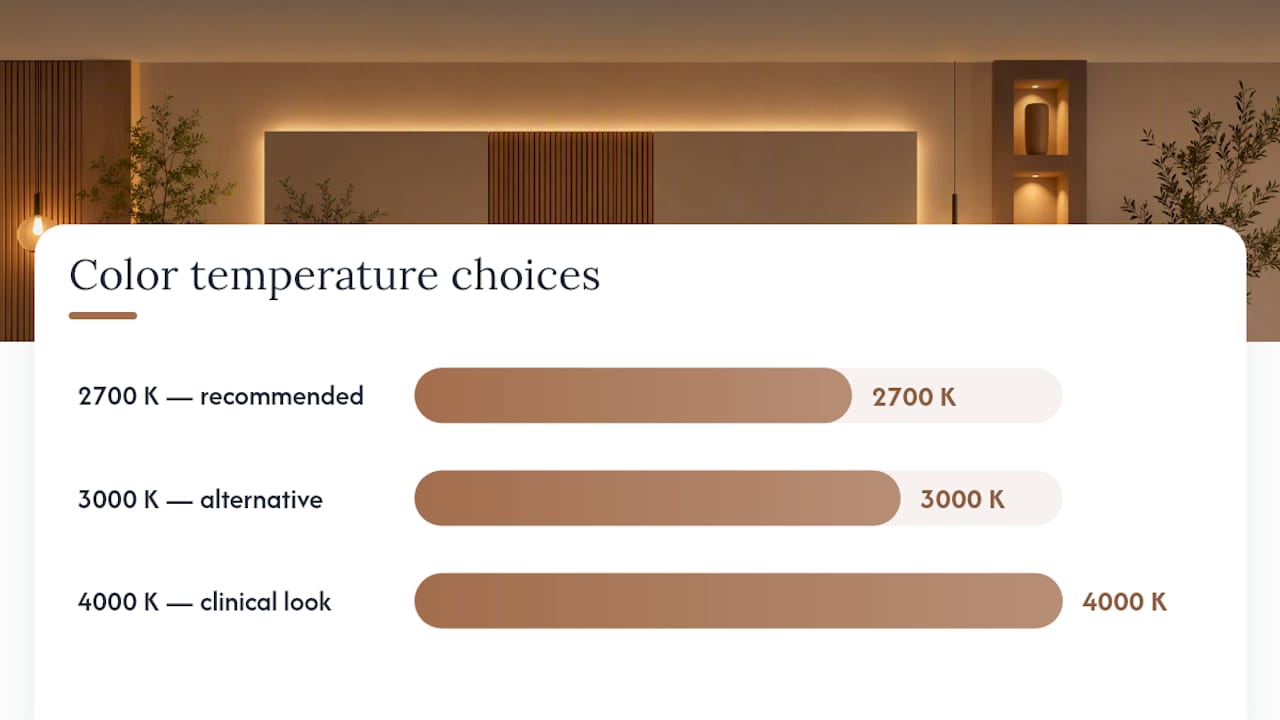
Bias lighting isn't just decoration. A warm strip behind the TV reduces eye strain during long viewing sessions and closes the contrast gap between a bright screen and a dark wall, which is part of why Refine Place recommends 2700K over cooler white light for this exact use. Cooler temperatures like 4000K read clinical and fight the warm-minimalist look you're going for. If you're deciding between color temperatures for other rooms too, our breakdown of 2700K versus 3000K covers where each one works best.
A few practical rules keep the tech invisible:
- Choose dimmable strips, not fixed-brightness ones. You'll want less light during movies and more during daytime cleaning.
- If you're building a recessed niche, leave that 2-inch perimeter for airflow and for pulling cable later.
- Route all cords through a single channel or in-wall kit. One clean line beats three tangled ones every time.
- Hide any smart hub or lighting controller inside the console or behind the panel. Control it through an app or a slim remote, not a visible box on a shelf. Our guide to building a smart home that doesn't look smart goes deeper on this.
Pro Tip: Before you commit to a dark or matte wall color, tape a large paper sample to the wall and watch it for a full evening. Glare and undertones show up differently under lamp light than they do in daylight, and repainting a whole feature wall is a lot more work than repainting a swatch.
Keeping the Space Around Your TV Clutter-Free
The fastest way to ruin a minimalist TV wall is to let it become the household's dumping ground for remotes, chargers, and mail. Give every device a home before it ever lands on the console. A shallow drawer or a lidded basket inside floating storage keeps remotes and cables out of sight without you having to think about it daily.
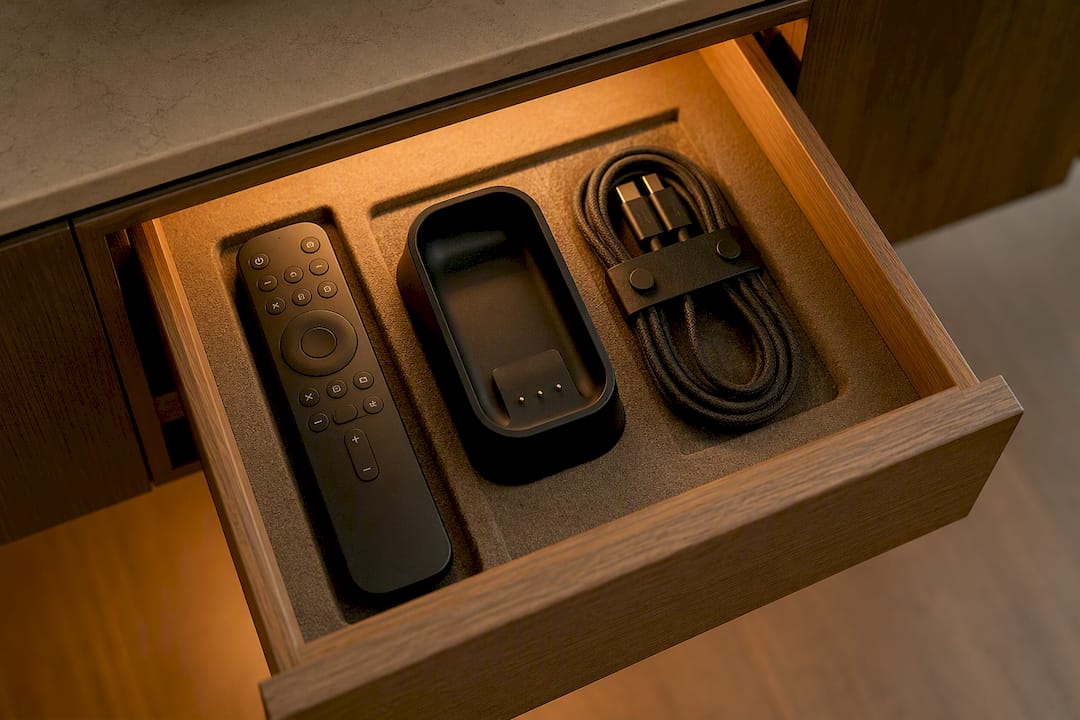
Route your remote-charging setup out of view too. A small charging dock tucked inside a cabinet or drawer beats three cords snaking across an open shelf. If your console has open shelving, treat it the same way you'd treat the wall itself: one intentional object per shelf, not a growing collection of mail, coasters, and stray cables.
Set a weekly two-minute reset. Walk up to the wall, remove anything that's landed there since last time, and put it back where it belongs. This habit matters more than any product you buy, because clutter creeps back in gradually, not all at once.
If you're prone to piling things on the console "just for now," swap the flat surface for one with a lip or a drawer front instead of open space. It sounds minor, but a surface that doesn't invite stacking stays clean with far less effort on your part.
Bringing Smart Home Control Into the Wall Without Breaking the Look
A minimalist TV wall and a smart home aren't in conflict, but they require some planning so the tech doesn't undo the calm you just built. The goal is to control everything (lights, TV, sound) without seeing the hardware that makes it possible.
Start with your remote situation. If you've got separate remotes for the TV, soundbar, and streaming box, consolidate them into one universal remote or your TV's built-in smart hub. That alone removes visual clutter and simplifies daily use.
For lighting, pair your bias strip and any ambient fixtures with smart plugs or in-wall smart switches you can control from a single app. This lets you set a "movie mode" that dims the room and brings up the backlight with one tap, no cluttered switch plate required. If you're rethinking your whole lighting setup around the TV wall, our beginner's guide to layered lighting walks through how ambient, task, and accent light should work together in a living room.
Keep hubs, routers, and streaming boxes inside your floating console or storage cabinet, with ventilation gaps so they don't overheat. A single, well-routed cable channel behind the TV should carry power and any remaining wired connections, keeping the wall itself completely clean.
Choosing Artwork That Doesn't Compete With the Screen
Remember the one-element rule: your TV wall gets exactly one additional focal point, and if that's artwork, it needs to support the room rather than fight the screen for attention. A single large piece, in a frame that matches your hardware finish (black frame with a black mount, wood frame with wood slats), reads as intentional. A cluster of small mismatched frames reads as clutter, even if each piece is nice on its own.
Stick to artwork with a limited color palette that echoes something already in the room, whether that's the warm tone of your floating console or the charcoal of your accent wall. Bold, busy prints pull the eye away from the screen and make the whole wall feel unsettled.
Placement matters as much as the piece itself. Keep any artwork at the same height as the TV, or noticeably higher on an adjacent section of wall, never awkwardly stacked directly above it unless you've measured the gap carefully. A gap of at least 6 to 8 inches between the top of the TV and the bottom of a piece above it keeps the two from visually merging into one cluttered block.
If you're drawn to a gallery-style arrangement instead, treat the entire cluster as your single element and keep spacing consistent throughout, the same 2 to 3 inch rule mentioned earlier for slat spacing works here too.
Lighting Placement That Reinforces the Minimalist Look
Bias lighting behind the TV does a lot of work, but it isn't the only light your wall needs. Recessed ceiling lights, placed a few feet in front of the wall rather than directly above the TV, add soft ambient fill without creating a glare on the screen. Direct downlight hitting the TV's surface is one of the most common lighting mistakes in otherwise well-designed rooms.
Wall washers or adjustable recessed fixtures aimed at a textured surface, like your wood slats or plaster niche, highlight the material itself and pull attention toward your one intentional element instead of the screen. This is especially effective at night when the bias lighting is on but you still want enough ambient light to move around the room comfortably.
Avoid table lamps placed directly beside the TV unless they're dimmed low. A bright lamp at screen height competes with the display and undercuts the calm effect you built with flush mounting and cable concealment. Floor lamps or sconces positioned outside the direct sightline work better, adding warmth to the room without pulling focus back toward the wall.
What I'd Actually Do in My Own Living Room
If I were starting from scratch, I'd pick one restrained element, wood slats or a single piece of art, pair it with warm 2700K bias lighting, and stop there. Add floating storage only if you genuinely need somewhere for a router or console; otherwise it's one more surface to clutter. Minimalism fails the moment it turns sterile, and the fix isn't more decor, it's picking one material and letting it repeat quietly elsewhere in the room.
Get More Warm Minimalist Lighting Ideas From The Connected Dwelling
Most TV wall projects live or die on lighting, not paint color or mount hardware, and that's the piece homeowners tend to figure out last instead of first. This site’s Lighting collection focuses on bias lighting picks, smart dimmers, and layered-light setups chosen for warm, low-glare rooms rather than showroom brightness.
Browse the collection for specific bias-strip and smart-dimmer recommendations that pair with the ideas above, or start with a room recipe for a warm modern living room to see how wood, plaster, and 2700K light come together in a real space. If your current setup already feels off but you can't pinpoint why, a piece on why living room lighting probably feels wrong is a good next stop before you buy anything.
Sources
- 34 TV Wall Ideas That Are Both Functional and Stylish — The Spruce
- 15 Minimalist TV Wall Accent Ideas That Elevate Your Living Space — Refine Place
- Minimalist TV Wall Design: 5 Approaches That Work — EasyCozyHome
- TV Wall Ideas Without Built-Ins: Make It Look Finished — Fitueyes